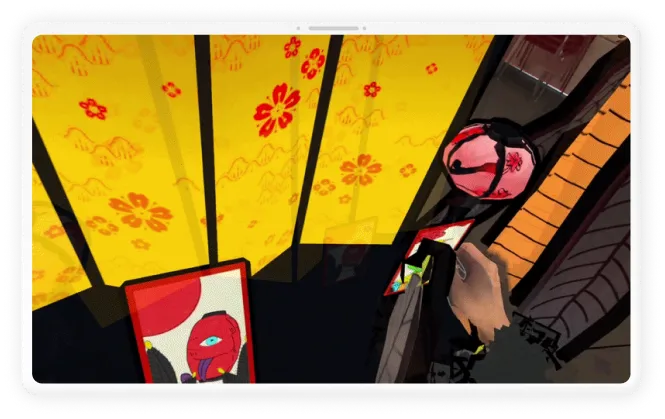
Monomon MR
Led project delivery and UX/UI design for a 2-player mixed reality (MR) combat experience built around spatial interaction, hand gestures, and shared physical play.
Overview
Highlights
GDC 2024 Showcase
Demo Showcase at the ETC’s Booth
Shared-Space MR
Led a 6-person team from concept to a playable Quest 3 build
Concept
Bring the fantasy of battling monsters into the player’s own environment.
Mixed reality transforms the surrounding room into part of the game world through physical movement, virtual characters, and spatial interaction.
Challenge

Balancing Ambition With Feasibility
Shape an ambitious MR concept around technical constraints, team capacity, and a four-month timeline.

Structuring for Continuous Iteration
Create a structure for the team to prototype, test, learn, and adjust without slowing delivery.
Production
Product Delivery & Team Leadership

Agile Delivery
Ran weekly sprints, retrospectives, and monthly milestones to keep the team aligned and moving.

Playtest Operations
Planned and facilitated playtests, then translated findings into product priorities.

External Showcase
Drove GDC participation and coordinated the team around a stable demo build.
High-Level Roadmap
Define the core experience and validate shared-space multiplayer MR feasibility.
Build the central loop and test interactions, gameplay, and technical performance.
Use live demos and playtest feedback to refine usability, gameplay, and interaction clarity.
Polish, validate competitive play, and deliver the final playable Quest build.
Experience Design
Design & Iteration
Alongside project management, I owned key UX/UI interactions and feedback systems. VFX, 3D, animation, and implementation were owned by my teammates.
Overall Process
Understand

Define
Design
Implementation
Playtest
Iterate
Delivery
Playtesting & Iteration
Refined the functional build through weekly playthroughs, then validated the experience with public players during two open-house testing days.
01 · Aiming & Targeting
Player Feel
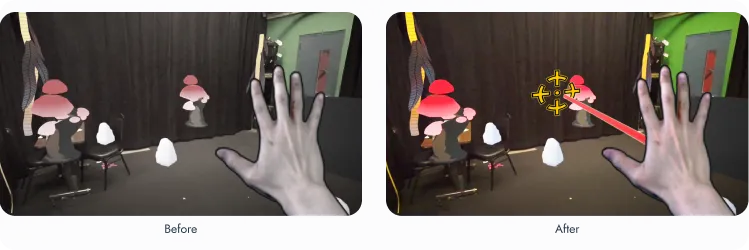
Players struggled to tell where their attacks would land.
Design Response
Introduced a dynamic cursor and clearer targeting feedback to make aiming more predictable.
02 · Attack Charging
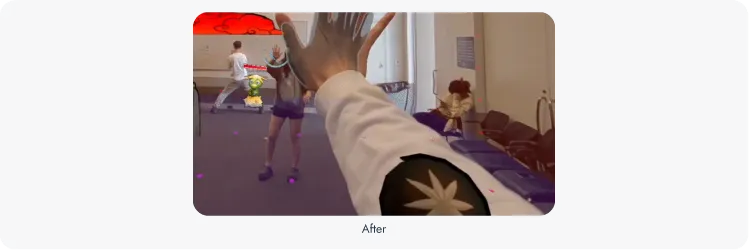
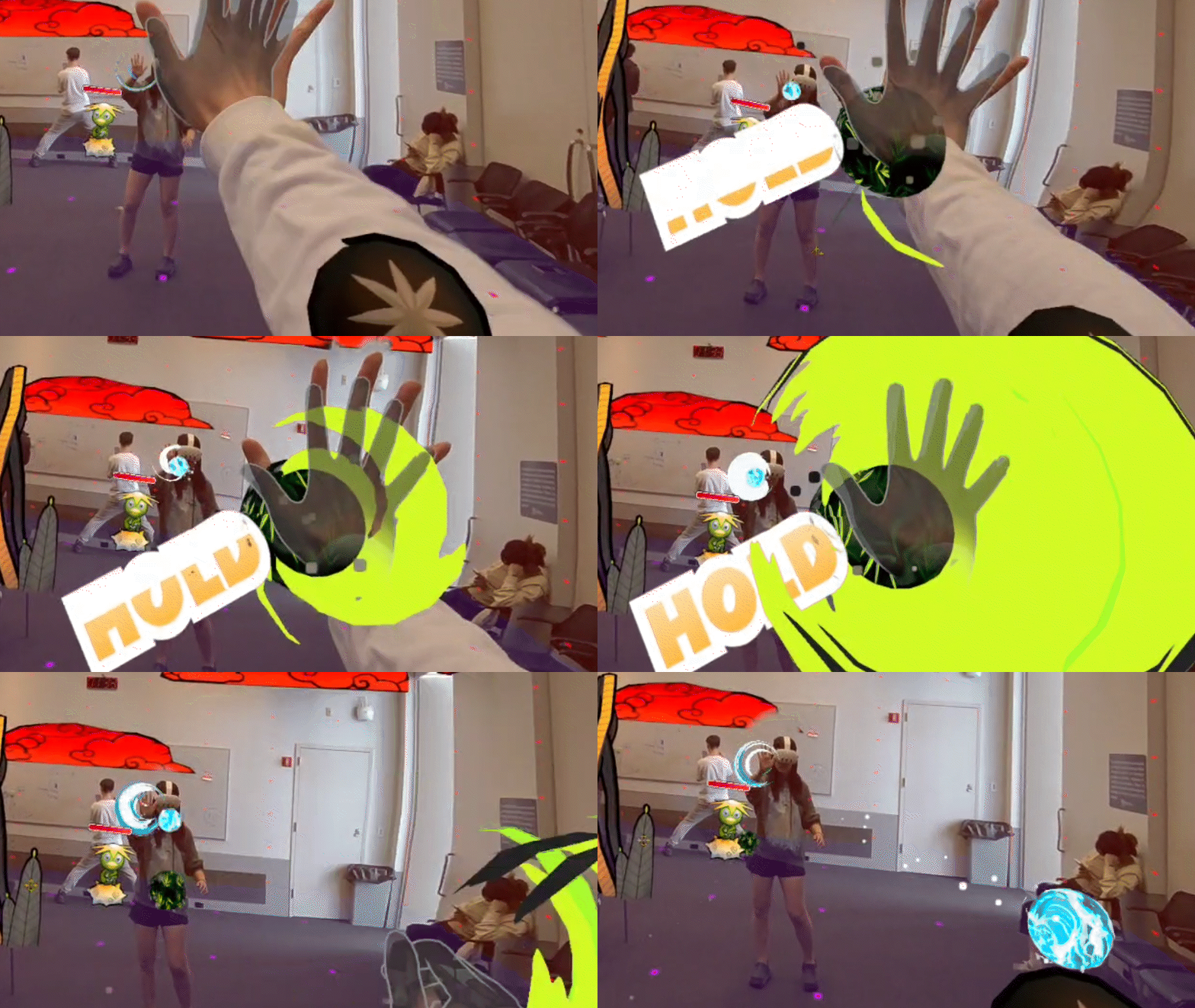
Player Feel
Players were unsure when an attack was ready.
Design Response
Added hold-and-charge feedback to communicate progress and attack readiness.
03 · Combat State Feedback
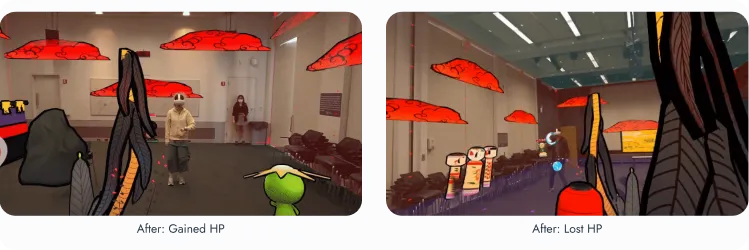
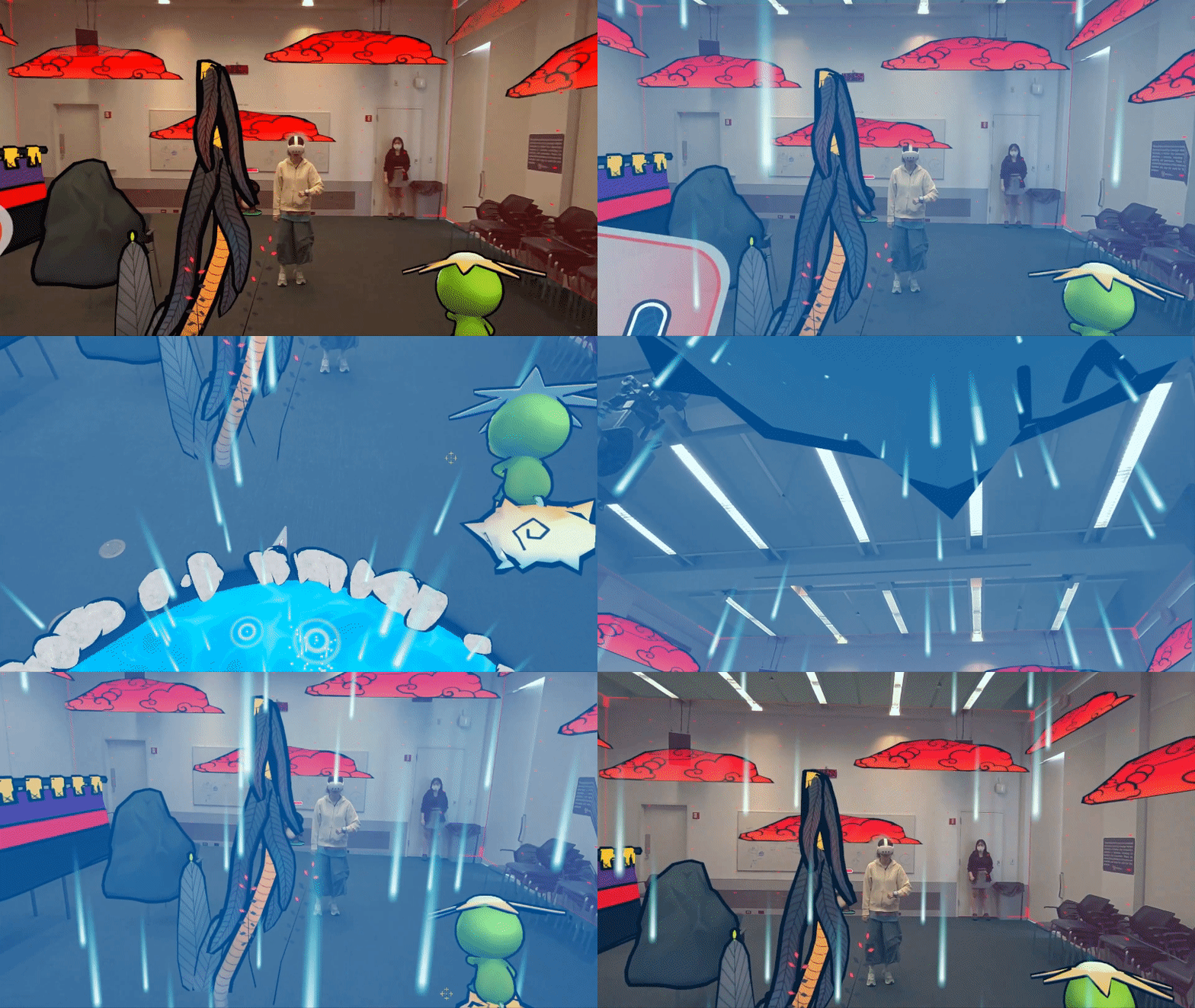
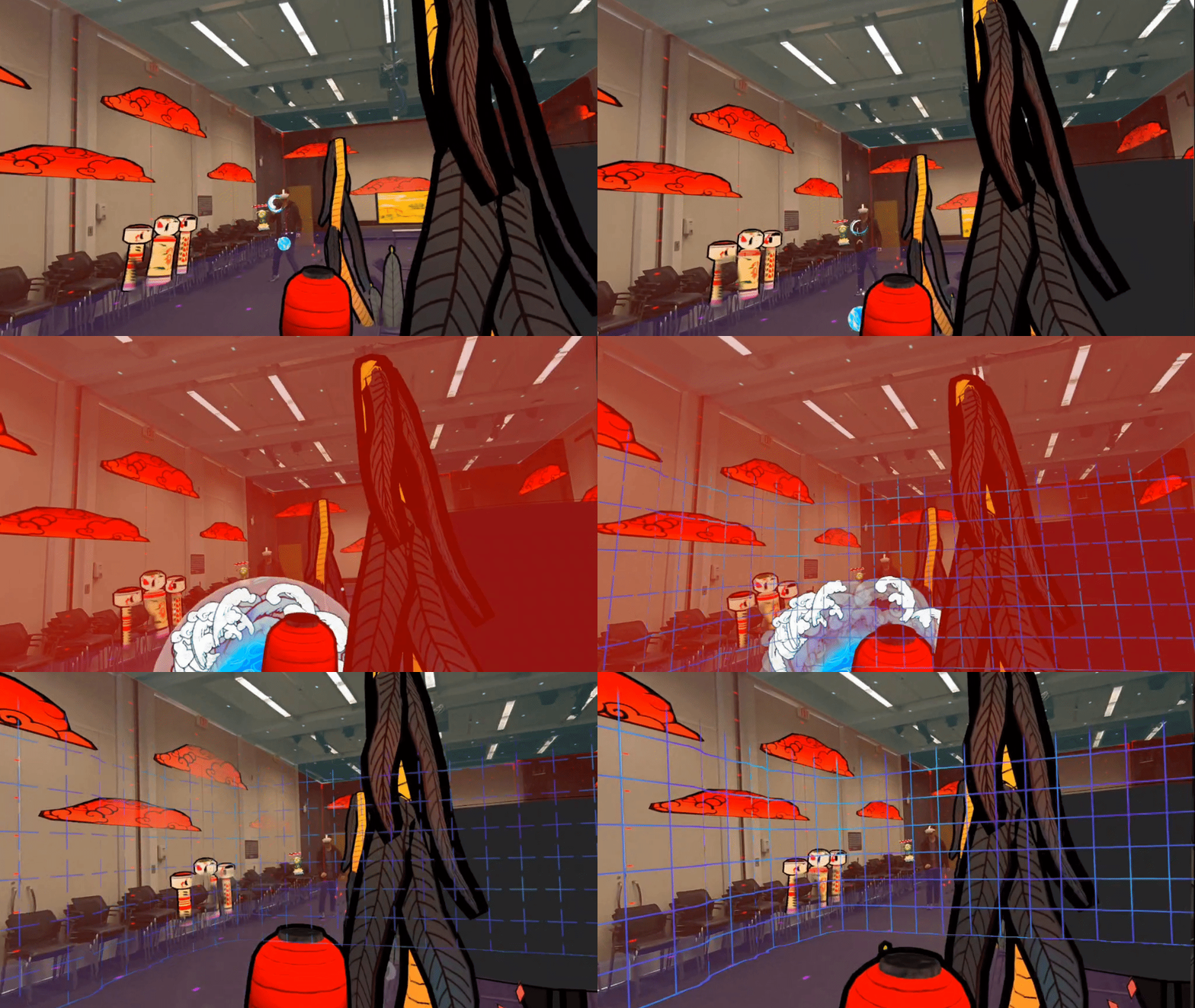
Player Feel
Fast-paced combat made health changes on the UI panel easy to miss.
Design Response
Used blue and red screen tints to reinforce healing and damage without interrupting gameplay.
FINAL DESIGN
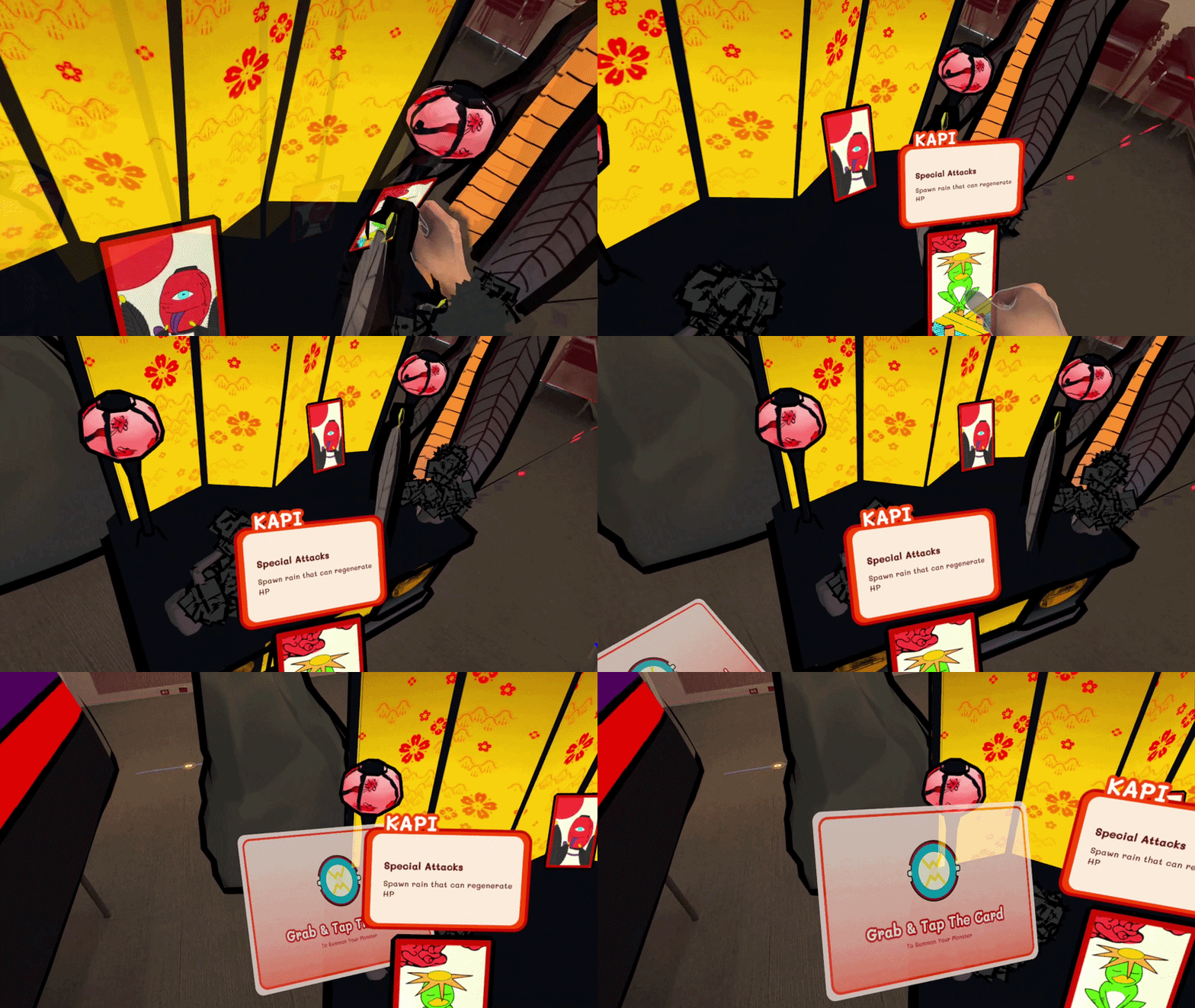
Experience Walkthrough
A walkthrough of the final UI and interaction flow, incorporating key changes from playtesting and iteration.
Impact
Project Outcomes

Cross-Functional Delivery
Delivered a playable Quest 3 build in four months with a 6-person team through clear milestones and iterative planning.

Playtest-Driven Decisions
Turned feedback from playtests, GDC, soft opening, and the ETC tournament into product improvements.